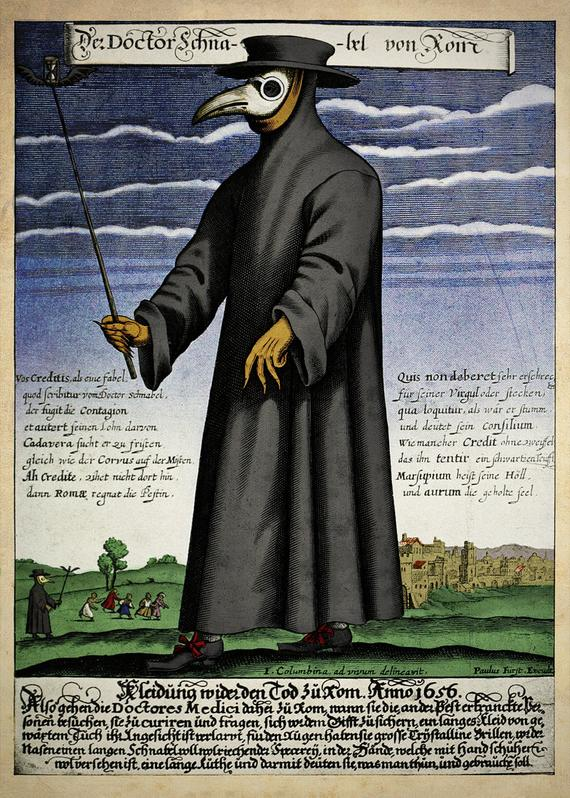
Food painting

Communico, Ergo Sum

In René Descartes’ famous Discourse on Method, he summarizes the proof of his own existence with the dictum Cogito, ergo sum (I think, therefore I am). As an answer to someone doubting their own existence, it’s pretty OK (despite the tradition of philosophical criticism which has found various flaws with the line of reasoning itself). The interesting thing about the Cogito to me, though, is not whether it technically works as a philosophical argument, but rather the fact that the particular verb chosen is cogitare. It makes sense in the context of the argument, where the only thing we are supposed to assume is the activity of thinking itself. But there is a deeper move being made here: the elevation of thought as the quintessential or bedrock activity of human existence. In reality, any verb will do: I love, therefore I am. I dance, therefore I am. I sneeze, therefore I am. For Descartes, the only one of these that we cannot ultimately doubt takes place is the act of thinking. Typical philosopher! But since the Cogito, as Kierkegaard pointed out, is basically already a tautology, why not use a different verb? ...
January 4, 2024 · 11 min · Jonathan Lipps
DALL-met

The consequences of AI for human personhood and creativity

In the past, as I’ve thought about the nature of modern technology and its impact on human life, I’ve generally felt one step ahead of the technological developments under consideration. The philosophical tools at our disposal to analyze and criticize technology felt effective, if only in principle. Again in principle, it seemed that if enough people just took the time to think and reflect critically about technology, we might have a chance to encourage a more humane trajectory for it. But with the recent and rapid onset (onslaught?) of new AI technologies and platforms (ChatGPT and other large language models—“LLMs”—foremost among them), that feeling of theoretical manageability has evaporated. It was no doubt a naïve feeling to begin with, and is now replaced by a sense of being adrift, at sea, with no sight of land amidst the churning waters of technological change. ...

April 24, 2023 · 36 min · Jonathan Lipps

A theological reflection on my first tattoos

Today I received my first set of tattoos.1 It took me many years to come up with something that I felt was meaningful enough to make a permanent part of my external appearance. Ultimately, I was able to develop a short poem in Koine Greek that hit the mark for me. What follows is a sort of theological meditation on the text and the meaning of these tattoos. The text in Greek:2 ...

November 30, 2022 · 5 min · Jonathan Lipps
Paul_Fürst_Der_Doctor_Schnabel_von_Rom_coloured_version

COVID-19, VR Church, and Ordinary Embodied Human Existence

Intro and Disclaimers Most of my writing energies these days go to keeping Appium Pro current, so it may surprise some of my Internet people to know that I have a personal blog, where I have (with decreasing frequency) mused in long or short form on a number of topics, most recently evaluating technology from a critical philosophical perspective. Of probably even greater surprise to many would be the fact that I have a strong interest, not just in the philosophy of technology, but in the theology of technology (and indeed, theology as it relates to technology). ...

March 27, 2020 · 22 min · Jonathan Lipps
borgman-interview

Interviewing Borgmann, Part 4

Author’s Note: This is the last of a 4-part series in which I interview Albert Borgmann, an eminent philosopher of technology. The interview has been transcribed and published here with minimal editing. I recommend starting with Part 1 to understand the greater context! On-demand apps and the sharing economy JL: We’ve already talked about the Internet of Things, so I think I’ll skip that question. There’s this other hot area in technology, which is the rise of on-demand goods and services applications where anything that we want, whether a good or a service, is wrapped up into an app designed to get us that thing as instantly and reliably as possible. You might have heard of Instacart or Uber or all these apps which are replacing the traditional mechanisms for procuring things, in a way which makes them more available. It’s the Device Paradigm. But to me it’s interesting that it’s being splintered into each good or commodity having its own app or service. It’s this kind of very clear picture of the fragmentation that you were talking about in your book. People love these apps; people whose lives are busy, for whom going grocery shopping is a chore that takes them away from quality time with their family or the little time that they have after work, or an app that can get a maid to your house in 10 minutes to clean and you never have to see them and it just charges your credit card and it’s just so convenient and it frees you up. There’s this disburdenment. It’s all very Device Paradigm in essence. What would you say to somebody who is really feeling the benefit of that? How could you convince them that maybe this is taking something away, or would you? ...

June 25, 2017 · 13 min · Jonathan Lipps
borgman-interview

Interviewing Borgmann, Part 3

Author’s Note: This is Part 3 of a 4-part series in which I interview Albert Borgmann, an eminent philosopher of technology. The interview has been transcribed and published here with minimal editing. I recommend starting with Part 1 to understand the greater context! The promise of technology JL: Sometimes I’m talking to people about your work, and, maybe as in the case of the conference I went to, people were familiar with it, but held a common misunderstanding that you are fundamentally opposed to technology or are really negative about technology. But based on some of the things you wrote (and you can tell me if I’m getting it wrong) it sounded like you were really affirming some of the original promise of technology… ...

June 25, 2017 · 21 min · Jonathan Lipps
borgman-interview

Interviewing Borgmann, Part 2

Author’s Note: This is Part 2 of a 4-part series in which I interview Albert Borgmann, an eminent philosopher of technology. The interview has been transcribed and published here with minimal editing. I recommend starting with Part 1 to understand the greater context! The relativism of technological change JL: Albert, I’ve been talking about your ideas with pretty much everyone that has an ear, or half an ear, to listen. It’s gotten to the point where, with my group of friends and colleagues, any time a topic comes up that triggers philosophical conversation, they say “oh no, Jonathan’s about to talk about technology again!” ...

May 19, 2017 · 10 min · Jonathan Lipps
borgman-interview

Interviewing Borgmann, Part 1

Author’s Note: In October 2015, Jessica and I drove across the western United States. When we passed through Montana, we had the opportunity to meet Albert Borgmann, my favorite philosopher of technology, at his home. Over the past half-decade, I have blogged chapter-by-chapter through his book Technology and the Character of Contemporary Life (see the Overview to check out that series). It was a rare gift to be able to sit with this gracious and wise human being for several hours and ask him all the questions that arose from my study of his work. The following is a barely-edited transcript of that interview, ranging across a variety of philosophical and cultural topics. Because of its length, the interview is separated into several parts. ...

May 18, 2017 · 13 min · Jonathan Lipps

Notes on the Surface Book Pro i7, Part 1

I’m writing this blog entry on a Microsoft Surface Book Pro i7, which is admittedly a bit odd for me. While I grew up using Windows PCs, I switched to Mac about 12 years ago and never looked back. As both a developer and a producer of creative artifacts (music, for example), I’ve been a big fan of the Mac OS and ecosystem. Being Unix-based and having a simple and elegant design philosophy, for the most part I’ve never had any reason to think about switching back to Windows (except for the odd game here and there). ...

January 13, 2017 · 7 min · Jonathan Lipps
promise

Blogging Borgmann: TCCL Chapter 26, "The Recovery of the Promise of Technology"

Note: This entry is part of a series where I am blogging chapter-by-chapter through the book Technology and the Character of Contemporary Life ( TCCL) by Albert Borgmann. If you’re new, you may want to start at the Overview. Technology promised us liberty and prosperity, but in significant ways this has not come to pass. In the industrialized nations we are free from hunger, disease, and illiteracy, but increasingly, commodities overflow in the center of our lives and we have become shallow people. We take pride in our technological means without caring much about what they are for. We have created genuinely amazing technological devices, but being human is about more than that. We must go beyond freedom from disease (the negative freedom that technology has provided) to engaging with life. ...

April 15, 2016 · 2 min · Jonathan Lipps