Blogging Borgmann: TCCL Chapter 14, "Technology and Democracy"

Note: This entry is part of a series where I am blogging chapter-by-chapter through the book Technology and the Character of Contemporary Life ( TCCL) by Albert Borgmann. If you’re new, you may want to start at the Overview. We now continue our discussion of technology and the political arena. This chapter in particular is about the theoretical dimension of politics, i.e., how people have formulated the ideas behind our political system and how they interact with technology. We in the US and many other places exist within what is broadly known as the “liberal democratic tradition”. It can be defined succinctly as the intersection of the values of liberty, equality, and self-realization. More than anything else, liberal democracy wants to leave the question of the good life (what is it to live well as a human being?) open, because it believes the individual self must determine its own answer to that question. ...
September 9, 2014 · 5 min · Jonathan Lipps
iont

Internet of Nothings

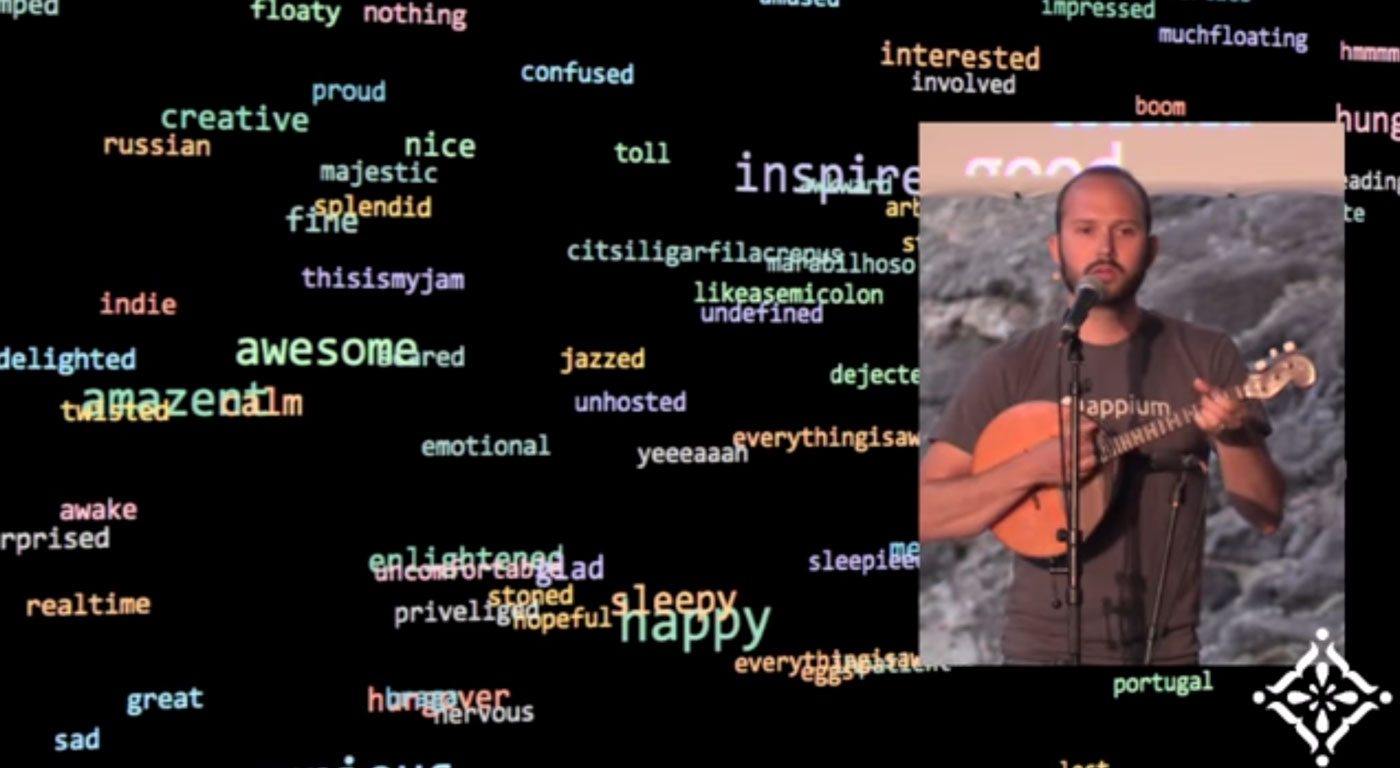
I gave a talk today called Internet of Nothings: Technology and Our Relationship With the Things in Our World at LXJS, a JavaScript conference in Lisbon, Portugal. I’m excited to have been given the opportunity to talk about the philosophy of technology! There’s an embedded video of the talk below, and I’ve included the slides, the slightly-edited text of my notes, as well as the lyrics to the song I performed. If you’re new to my blog and this topic, I recommend checking out my Blogging Borgmann series, where I’m blogging chapter-by-chapter through a book on the philosophy of technology by Albert Borgmann. Enjoy! ...

June 28, 2014 · 21 min · Jonathan Lipps

Blogging Borgmann: TCCL Chapter 13, "Technology and the Social Order"

Note: This entry is part of a series where I am blogging chapter-by-chapter through the book Technology and the Character of Contemporary Life ( TCCL) by Albert Borgmann. If you’re new, you may want to start at the Overview. This chapter is the first of four on the relationship of technology to social and political issues. Borgmann is trying to argue that we should conceive of and judge society and politics in the light of technology, and that it is in social life or politics that the device paradigm must finally be discussed, since these areas of life are those that receive the most attention. Unfortunately, the fundamental modus operandi of technology is not yet recognized in this sphere. ...

December 26, 2013 · 4 min · Jonathan Lipps

Blogging Borgmann: TCCL Chapter 12, "Paradigmatic Explanation"

Note: This entry is part of a series where I am blogging chapter-by-chapter through the book Technology and the Character of Contemporary Life ( TCCL) by Albert Borgmann. If you’re new, you may want to start at the Overview. One of the foundational aims of Borgmann’s whole book is the attempt to actually give an explanation for technology. Hence we discussed what counts as an explanation in the scientific realm in earlier chapters. In this middle section of the book, Borgmann is concerned to substantiate the notion of the Device Paradigm, not just as a feature of technology but as a way of explaining technology and everything that goes along with it. ...

December 24, 2013 · 3 min · Jonathan Lipps

Blogging Borgmann: TCCL Chapter 11, "Devices, Means, and Machines"

Note: This entry is part of a series where I am blogging chapter-by-chapter through the book Technology and the Character of Contemporary Life ( TCCL) by Albert Borgmann. If you’re new, you may want to start at the Overview. The point of this chapter, according to Borgmann, is to provide more rigor around what has thus far been an intuitive account of the device paradigm. He begins with the question of whether there are any competing analyses of it on offer. In fact, critiques of what might be considered technology have been around since the time of, say, the introduction of the steam engine. For critics of this period, the symbol of technology was the “machine” they saw altering the landscape around them. The steam engine was ambivalent: it was powerful and convenient, but also “ravenous”, consuming land, resources, and quiet. Writers of this persuasion, Borgmann claims, framed their arguments in terms of a means/end imbalance, where the danger was that our technological means (the machines) might unwittingly become our ends. (The solution would then be to correct this balance.) ...

May 31, 2013 · 4 min · Jonathan Lipps

Blogging Borgmann: TCCL Chapter 10, "The Foreground of Technology"

Note: This entry is part of a series where I am blogging chapter-by-chapter through the book Technology and the Character of Contemporary Life ( TCCL) by Albert Borgmann. If you’re new, you may want to start at the Overview. In this chapter, Borgmann explores what he calls the Foreground of technology. This is essentially the world of the use (i.e., consumption) of technological devices, rather than the world of their construction or operation. As we are all aware, technology results in a large set of commodities, and the “Foreground” is the world of their consumption. The Foreground is invoked, Borgmann says, when conversation turns to the topics of “leisure, consumption, or the standard of living” (48). ...

August 10, 2012 · 6 min · Jonathan Lipps

Blogging Borgmann: TCCL Chapter 9, "The Device Paradigm"

Note: This entry is part of a series where I am blogging chapter-by-chapter through the book Technology and the Character of Contemporary Life ( TCCL) by Albert Borgmann. If you’re new, you may want to start at the Overview. With chapter 9 we come to one of the most important chapters of TCCL. In it Borgmann elucidates the Device Paradigm, which is his way of explaining technology by reference to paradigmatic examples of it. The idea is that through a careful analysis of several obvious examples of technological devices, discussed in contrast to the pretechnological situation, we will begin to see the pattern which heretofore was invisible, hidden as it was behind the veil of being taken for granted. ...

May 15, 2012 · 7 min · Jonathan Lipps

Blogging Borgmann: TCCL Chapter 8, "The Promise of Technology"

Note: This entry is part of a series where I am blogging chapter-by-chapter through the book Technology and the Character of Contemporary Life ( TCCL) by Albert Borgmann. If you’re new, you may want to start at the Overview. This chapter begins Part 2 (The Character of Technology), the first half of which (chs 8-12) aims to describe and articulate the paradigm of technology, and the second half of which (chs 13-16) aims to ask how we have come to terms with technology politically and socially. The thesis which Borgmann will be following throughout is that technology, as the characteristic way we engage with the world, is guided by a basic pattern. This pattern, however, like many deeply ingrained patterns, can be impossible to see. This is essentially the observation that the features of our worldviews which are fundamental (in the “background”, so to speak) are themselves not open to our introspection without some serious effort. ...

February 28, 2012 · 4 min · Jonathan Lipps

Blogging Borgmann: TCCL Chapter 7, "Science and Technology"

Note: This entry is part of a series where I am blogging chapter-by-chapter through the book Technology and the Character of Contemporary Life ( TCCL) by Albert Borgmann. If you’re new, you may want to start at the Overview. At this point in our exploration of the relationship between modern science and technology, what can we say with confidence? First, that modern science shows us that the world exists in a large matrix of possible states of affairs. The space of these possibilities is defined by the world’s initial conditions: given some physical state of affairs in the past, our world is one of its possible subsequent states. Technology can then be seen to “[reflect] a determination to act transformatively on these possibilities” (27). In other words, science tells us what’s physically possible and through technology we decide to act on them in order to change the world. In these roles, both science and technology share a problem: there is no principled way, using only their own resources, to decide what to explain or what to transform. ...

January 28, 2012 · 5 min · Jonathan Lipps

Blogging Borgmann: TCCL Chapter 6, "The Scope of Scientific Explanation"

Note: This entry is part of a series where I am blogging chapter-by-chapter through the book Technology and the Character of Contemporary Life ( TCCL) by Albert Borgmann. If you’re new, you may want to start at the Overview. In this chapter we examine how far the validity of scientific explanation (the style of explanation called deductive-nomological) extends. Can there be any objections to the claim that scientific explanation is the proper mode of explanation for every question? Borgmann discusses such objections to both the necessity and sufficiency of scientific explanation. ...

December 14, 2011 · 5 min · Jonathan Lipps